
Cancer-Associated Fibroblast
Cell Line: Primary Human Pancreatic CAF / CAF-1 · Pancreatic Ductal Adenocarcinoma
01Microscopy Image
3 Channels · 696 × 520 px · 0.1084 µm/px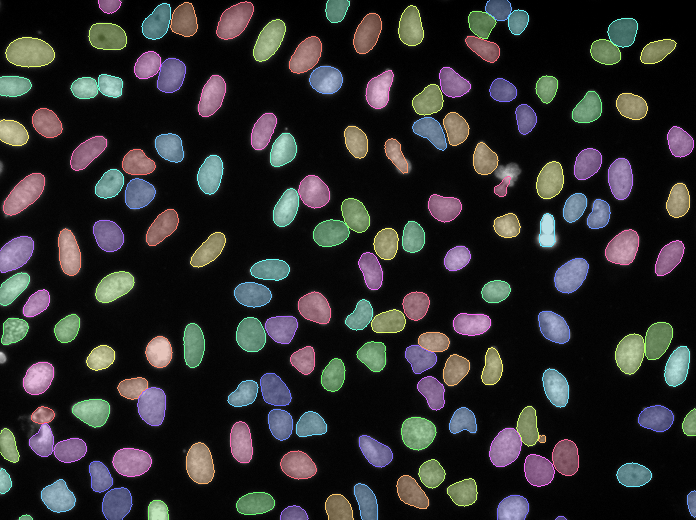
Objective: 63x / 1.40 Oil DIC Plan-Apochromat · Leica TCS SP8 Confocal System
Staining: DAPI (Nuclei) / Alexa Fluor 488 (alpha-SMA) / Cy5 (CXCL12)
Treatment: +10 ng/mL recombinant human TGF-beta1 (48h exposure)
Resolution: 696 × 520 px (0.1084 µm/px)
Accession: S-BIAD823 / BBBC039v1 · CC-BY 4.0 International
Source: PMID: 15882617 / 10.1016/j.cell.2005.02.034
02Acquisition & Provenance Metadata
03Biological Context & Oncology Function
Cancer-associated fibroblasts (CAFs) are prominent stromal cells in solid tumors. Upon activation by tumor-derived TGF-beta, CAFs undergo contractile transdifferentiation, produce dense collagenous extracellular matrix, and secrete immunosuppressive chemokines including CXCL12 (SDF-1) to exclude cytotoxic T lymphocytes from the tumor core.
Lineage: Mesenchymal stromal lineage
04Associated Genes (3)
Encodes smooth muscle alpha-2 actin; canonical molecular marker for myofibroblastic CAF activation.
Encodes stromal cell-derived factor 1 (SDF-1); promotes tumor angiogenesis and T-cell exclusion.
Cell-surface serine protease selectively expressed by reactive stromal fibroblasts in epithelial cancers.
05Associated Proteins (2)
Contractile cytoskeletal filament protein forming stress fibers that generate mechanical tissue tension.
Chemoattractant cytokine that binds CXCR4 and CXCR7 on tumor and immune cells.
06Biological Pathways (2)
Primary biochemical driver of normal-to-CAF transdifferentiation via SMAD2/3 phosphorylation.
Signaling cascade that prevents cytotoxic CD8+ T-cell infiltration into desmoplastic tumor cores.
07Associated Diseases & Pathologies (2)
Characterized by an exceptionally dense desmoplastic stroma comprising up to 80% of total tumor volume.
High CAF density correlates with therapeutic resistance and metastatic dissemination.
08Phenotypic Profiles & Morphology Metrics
Elongated bipolar morphology featuring dense intracellular actin stress fibers.
Elevated Young's modulus of surrounding tissue resulting from aligned collagen crosslinking.
09Literature Evidence (2)
Stromal fibroblasts present in invasive human breast carcinomas promote tumor growth and angiogenesis through elevated CXCL12/SDF-1 secretion.
Targeting CXCL12 from FAP-expressing carcinoma-associated fibroblasts synergizes with anti-PD-L1 immunotherapy in pancreatic ductal adenocarcinoma.