
U2OS Osteosarcoma
Cell Line: U2OS · Osteosarcoma
01Microscopy Image
1 Channels · 696 × 520 px · 0.3225 µm/px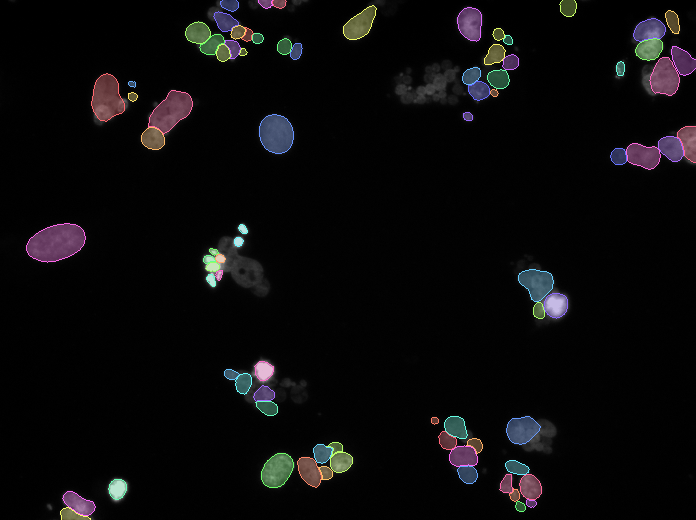
Objective: 20x / 0.75 NA S Fluor · ImageXpress Micro Automated Cellular Imaging System
Staining: Hoechst 33342 (DNA nuclear counterstain)
Treatment: Untreated baseline culture (high-content array)
Resolution: 696 × 520 px (0.3225 µm/px)
Accession: BBBC039v1 · CC0 1.0 Universal Public Domain
Source: PMID: 30531998
02Acquisition & Provenance Metadata
03Biological Context & Oncology Function
U2OS is a human osteosarcoma cell line extensively used in high-content screening and cellular morphology profiling. Cells maintain wild-type p53 and represent an established standard for high-throughput nuclear segmentation and phenotypic screening.
Lineage: Epithelial-like osteogenic sarcoma
04Associated Genes (1)
Maintains wild-type functional p53 signaling pathway in U2OS.
05Associated Proteins (1)
Regulates cell cycle arrest and apoptosis upon genotoxic stress.
06Biological Pathways (1)
Arrests cell division in response to unreplicated or damaged genomic DNA.
07Associated Diseases & Pathologies (1)
Malignant primary neoplasm of bone producing immature bone matrix.
08Phenotypic Profiles & Morphology Metrics
Regular convex nuclear boundaries typical of untreated adherent monolayers.
09Literature Evidence (1)
Nucleus segmentation in high-content screening using deep convolutional neural networks and the BBBC039 benchmark.